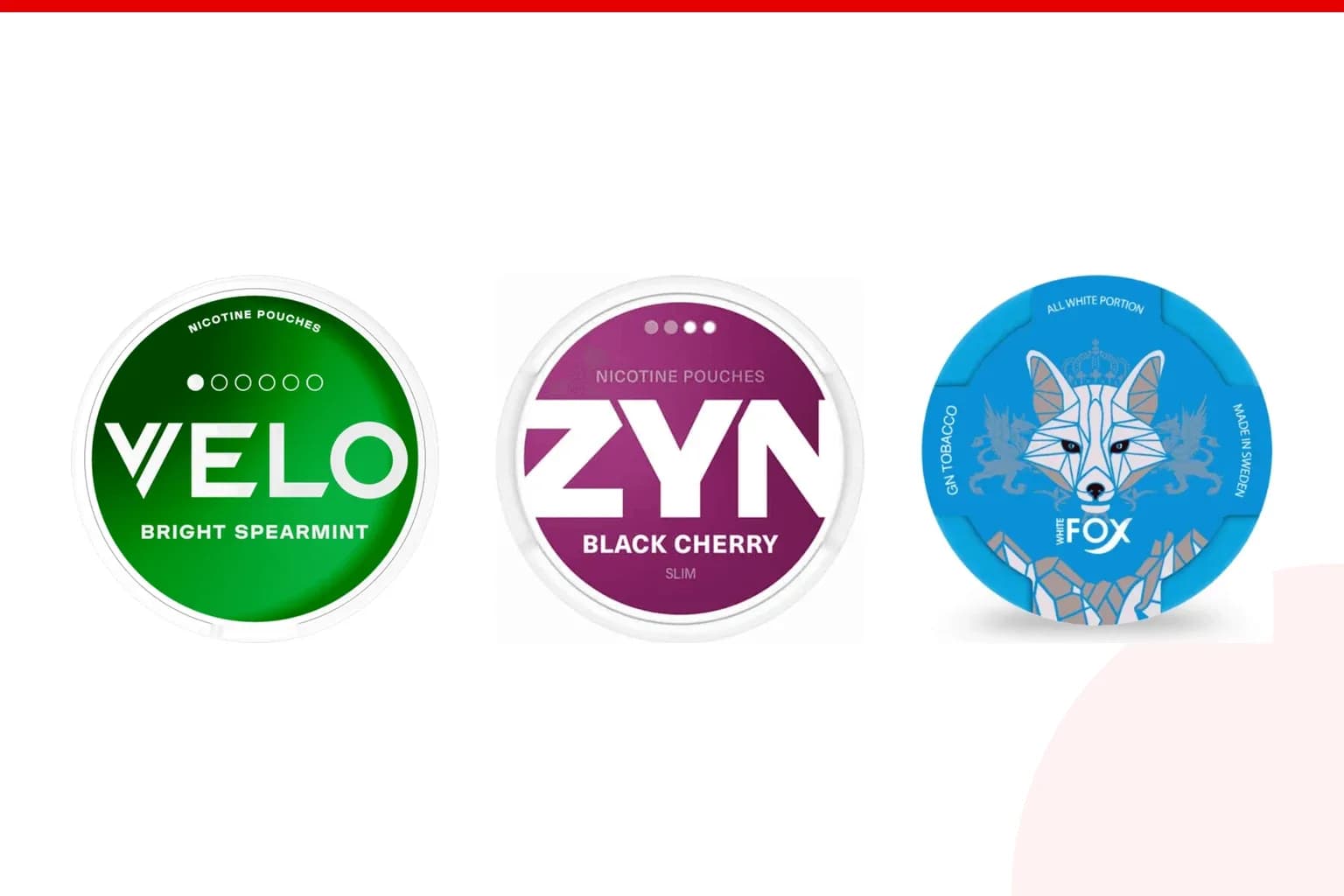
Your first can of nicotine pouches
Nobody tells you what the first twenty minutes are like, or which of the odd sensations in the first week are normal. A first-can walkthrough: four decisions before you order, then hour by hour and day by day.

Nicotine Pouches Canada · Published · Reviewed · 9 min read
Prices, doses and pouch counts on this page are read from our own catalogue and from the per-can fact sheets we compile, as the shelf stood on the review date above. How we research and correct these pages.
A first can of nicotine pouches is a fairly small purchase — CA$12 to CA$14 — attached to a surprisingly large number of decisions. There are 1095 cans on our shelf across 70 brands, and nothing on any of them explains what the numbers mean, how long one lasts, or which of the sensations in the first ten minutes are supposed to happen.
This page is the walkthrough: what you are buying, the four decisions to settle before you order, what the first pouch is like minute by minute, and what the first week looks like. It is deliberately not a product ranking — if you want cans with prices attached, best nicotine pouches for beginners is that page.
What you are actually buying
A nicotine pouch is a small soft pad of plant fibre, nicotine, flavouring and a sweetener, sealed in a permeable pouch about the size of a fingernail. It contains no tobacco leaf. You put it between your upper lip and your gum, leave it there, and throw it away afterwards. There is nothing to light, nothing to charge, and nothing to spit.
That last part is the difference people notice first if they have used traditional snus, which is ground tobacco and behaves quite differently. Modern pouches are white, dry to the touch, and do not stain — which is a large part of why the format took over. We wrote out the full comparison in nicotine pouches versus snus.
A can holds twenty pouches in almost every case. At two or three a day that is a week; at a dozen a day it is under two days, which is worth knowing before you decide how many to order.
Four decisions before you order
Strength
Three to four milligrams per pouch if you have not used nicotine before; four to six if you have used it in another form. 66 cans on our shelf sit under 4 mg and 254 at 6 mg or under, so neither answer narrows things much — but going above six on a first can is the single commonest way to decide you dislike the format. There is a longer version of this decision in which strength should you buy.
Format
Mini or slim. A mini is smaller, sits more discreetly and finishes sooner, which makes it forgiving for a first can — 87 of ours are minis. A slim holds more material, runs longer, and is what most of the market is. Large is a later decision, not a first one.
Flavour
Mint, for a first can, and this is a practical recommendation rather than a matter of taste. Cooling gives the sensation somewhere to go, which makes an unfamiliar experience read as pleasant rather than merely odd, and mint is the largest family on the shelf so there is plenty of room to be fussy later. Fruit and dessert flavours are excellent and they are easier to appreciate once the format itself has stopped being the novelty. Our flavour guide covers what each brand does well.
How many cans
Two or three, in different flavours, from the same strength band. One can is not enough to learn anything — the first pouch out of a fresh can is the least representative one in it — and six cans of something you have met once is a commitment rather than an experiment. Two or three is a smaller order than our free-delivery threshold of CA$150, which takes 11 cans — a first order is about learning what you like, not about clearing the bar.
| Decision | First can | Why not the alternative |
|---|---|---|
| Strength | 3–6 mg per pouch | Above 6 mg the sensation drowns the flavour, and you learn nothing except that it was unpleasant |
| Format | Mini or slim | A large holds more material and runs longer than a first session wants |
| Flavour | Mint or a mint-forward fruit | Cooling makes an unfamiliar sensation legible; a subtle fruit gets lost behind it |
| Quantity | Two or three cans | One is not a test; six is a commitment to a flavour you have met once |
| Nicotine-free | 9 cans, genuinely zero | Worth knowing this exists. A zero-dose can is sometimes still labelled Light by its maker |
The first pouch, minute by minute
Put it between your upper lip and gum, off to one side rather than front and centre. Then leave it alone — no chewing, no sucking, no shifting it about. Everything below happens by itself.
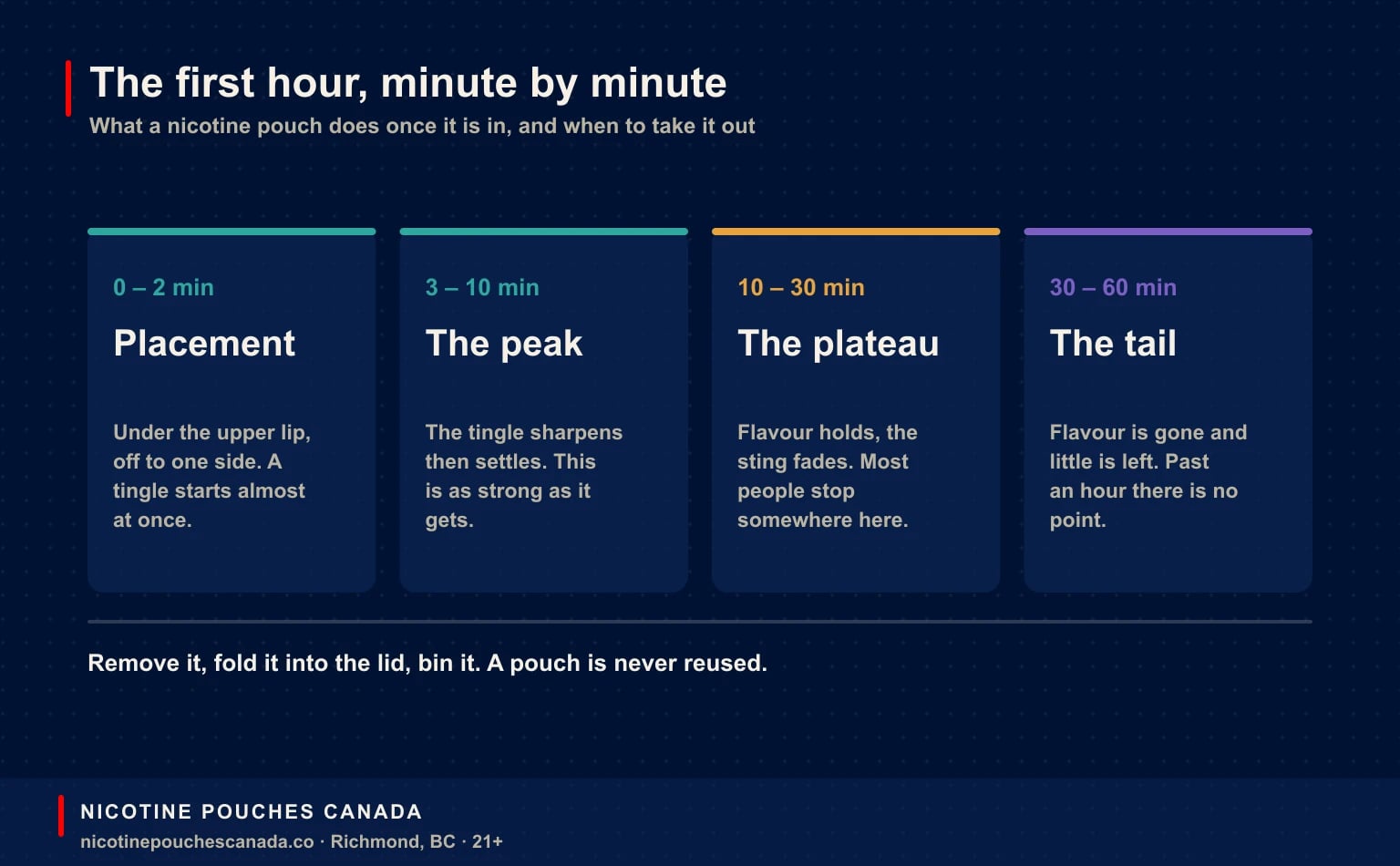
The tingle in the first minute is normal and it is the thing that surprises people most. It sharpens for a few minutes, settles, and then fades while the flavour carries on. By twenty minutes the flavour is going; by thirty there is very little left. Take it out somewhere in that window, fold it into the compartment in the lid, and empty the lid into a bin.
If the first ten minutes are uncomfortable rather than merely noticeable, take it out. That is not a failed attempt — it is information, and it means the next can should be a band lower. Nothing about the format requires finishing a pouch you are not enjoying.
The first week
The useful thing about the first week is that most of what changes is your reference point rather than the product. Roughly:
- Days one and two. Everything is the sensation. You will not have much of an opinion about the flavour yet, and any judgement you form about a can now is mostly a judgement about the format. Two or three pouches a day is plenty.
- Days three and four. The tingle stops being the headline and the flavour comes forward. This is the point at which a can becomes comparable to another can, and the first point at which trying a second flavour tells you anything.
- Days five to seven. You will have a working sense of session length — whether twenty minutes suits you or whether you are reaching for the lid at ten. That, more than strength, is what decides whether mini or slim is your format.
- End of the first week. Now is when a strength decision is worth revisiting. If cans are finishing without you noticing them, move up one band. If sessions are still sharp at ten minutes, stay where you are or drop one.
Change one thing at a time. If you switch strength, format and flavour in the same order, you will have three new variables and no way to tell which one changed the experience.
Five things nobody mentions
- The lid has a compartment in it. It is for used pouches, and a startling number of people never find it. It is not a design flourish — it is the difference between a tidy habit and a used pouch in a car door.
- The first pouch from a fresh can is the odd one out. The material has been sealed dry and the flavour sits unevenly across a full can. Give any new can three or four pouches across two days before deciding what you think.
- Heat ruins a can faster than time does. A tin left in a car or on a windowsill goes stiff and flat, and it reads as a bad batch. Lid closed, somewhere cool — how to store nicotine pouches has the rest.
- Hot drinks accelerate everything. A coffee with a pouch in makes a familiar can feel sharper than usual. Not a problem, but worth knowing before you conclude the can is inconsistent.
- A used pouch still contains nicotine. Keep both the can and the lid out of reach of children and pets — a used pouch is small, soft and exactly what a dog will investigate.
Buying a first can in Canada
Convenience stores and gas stations no longer sell nicotine pouches in Canada, and pharmacies carry only the authorised nicotine-replacement range, so a first can is almost always an online purchase. That is worth planning for: it means a delivery window rather than a walk to the shop, and it is the reason ordering two or three cans at once makes more sense than ordering one. Ours ship from British Columbia, free over CA$150, with the details on our shipping and delivery page.
You must be 21 or older to buy from us. If you want the wider picture of how the Canadian market works before you order, how to buy nicotine pouches in Canada covers channels, payment and stock, and the whole shelf is at our nicotine pouch range.
What does a nicotine pouch feel like the first time?
A distinct tingle under the upper lip within the first minute, sharpening for a few minutes and then settling. Most people describe it as a fizz or a warmth rather than a sting. If it is genuinely uncomfortable instead of merely noticeable, the can is above your band. Side effects and what causes each one separates the sensations that come from where the pouch sits from the ones that come from the dose, which is the difference that decides whether a lighter can would help.
Which nicotine pouch should I try first?
A mint, at three to six milligrams per pouch, in a mini or a slim. Mint because cooling makes an unfamiliar sensation easier to read, and that dose band because it is high enough to be a real experience and low enough to leave somewhere to go.
How long do you keep a nicotine pouch in?
Twenty to thirty minutes suits most people. Cans quote an upper limit around an hour, but that is a maximum rather than a target, and there is very little left after half an hour. A mini finishes sooner than a slim because it holds less material.
Where do you put a nicotine pouch?
Between the upper lip and the gum, off to one side. Not the lower lip and not front and centre — off to one side keeps it clear of your teeth and tongue and spreads the sensation rather than concentrating it in one spot.
Do nicotine pouches contain tobacco?
No. The pad is plant fibre with nicotine, flavouring and sweetener, which is what makes them white and dry rather than dark and moist. Traditional snus is ground tobacco leaf and behaves quite differently.
How many pouches are in a can?
Twenty in almost every case on our shelf, with a handful of exceptions running to twenty-one, twenty-two, twenty-four and higher. At two or three a day a can is about a week.
Can you swallow the saliva?
Yes. There is nothing to spit — that is one of the practical differences from traditional snus. Some people find it accelerates the sensation slightly in the first few minutes.
How much does it cost to start?
A can is CA$12 to CA$14 on our shelf, and two or three is a sensible first order — enough to compare flavours without committing to one. Delivery is free over CA$150, which takes 11 cans at our flat price — worth knowing before you decide how much to order.
Are nicotine pouches legal in Canada?
Yes, for adults. Buying, owning and using them are all lawful. What the rules restrict is where they can be sold: convenience stores and gas stations can no longer stock them, pharmacies carry only the authorised nicotine-replacement range, and the rest of the market is online.
Join the club
Subscribe for deals, fresh drops and pouch news — straight to your inbox.
⚠️ This page discusses products containing nicotine, an addictive chemical. For adult use only. Keep out of reach of children and pets.